Thunky: Your Gateway to Warm, Retro Typography
Imagine a typeface that feels like a warm, familiar hug from the past. That’s exactly the sensation Thunky delivers, capturing the gentle, expressive spirit of classic sixties and seventies serif design in a way that feels both nostalgic and fresh. This isn't just another premium font; it's a carefully crafted design asset that brings immediate character and warmth to any creative project.
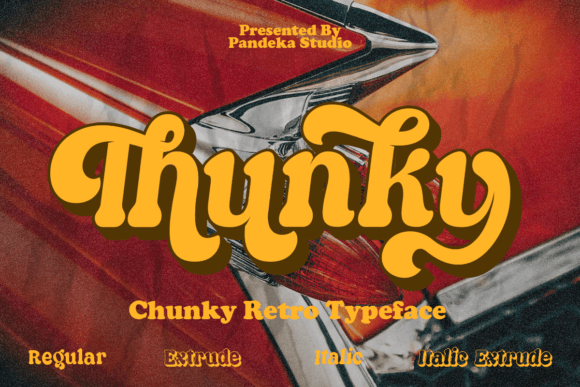
At its core, Thunky is an homage to the soft, rounded old-style serif typefaces that defined an era of expressive typography. Its gentle and juicy serifs provide the right amount of visual weight and approachability, making it a standout display font. The pack includes four essential styles: Regular, Extrude, Italic, and Extrude Italic. This variety offers fantastic creative flexibility, allowing you to create depth, emphasis, and visual hierarchy within your designs while maintaining a consistent, retro charm.
So, where does a font like Thunky truly shine? Its personality makes it ideal for projects where you want to evoke a sense of warmth, nostalgia, or handcrafted quality.
Creative Applications for Thunky
Consider using Thunky for your next logo design or brand identity project. Its distinctive character can help a brand stand out with a friendly, authentic voice. It’s particularly effective for boutique shops, artisanal products, cafes, or any brand that values a personal touch.
Beyond logos, Thunky is a powerful tool for packaging design. Imagine it on a coffee bag, a jar of homemade jam, or a craft beer label—the font’s warmth directly communicates the care and quality inside. It also excels in poster design, social media graphics, and editorial layouts for headlines or pull quotes that need to catch the eye and convey a specific mood.
For web design, using Thunky for key headings or accent text can break the monotony of standard sans serif fonts, adding a memorable visual accent. It’s also a fantastic choice for merchandise, event invitations, and digital products like eBook covers or course graphics.
Tips for Choosing and Using Thunky
When integrating a new display font into your work, a few practical steps can ensure success:
- Check Readability: While beautiful, display fonts are best for short bursts of text. Use Thunky for headlines, titles, and logos, and pair it with a clean, readable sans serif or simple serif font for body copy. This creates a balanced and professional font pairing.
- Match the Mood: Ensure the font’s nostalgic, warm personality aligns with your project’s overall message. Thunky’s retro touch might not be the best fit for ultra-modern, minimalist tech branding, but it’s perfect for lifestyle, food, or creative arts themes.
- Explore the Styles: Don’t just use the Regular version. Experiment with the Extrude style for impactful, dimensional titles, or the Italic for a touch of elegant emphasis. Using the different weights and styles from the font family adds depth to your design.
- Verify the License: Before downloading any commercial font, always review the license agreement to ensure it covers your intended use, whether for personal projects, client work, or merchandise.
Choosing the right typeface is a fundamental step in modern typography that significantly impacts visual consistency and brand recognition. A well-selected font like Thunky does more than just display words; it communicates emotion, sets a tone, and elevates the overall professional presentation of your work. It transforms a simple design into a polished, cohesive story.
By thoughtfully incorporating a creative font like Thunky into your toolkit, you gain the ability to instantly infuse projects with a specific, desirable aesthetic. It’s about giving your designs a voice that resonates and a look that feels intentionally crafted, helping you create more engaging and memorable visual experiences.